
The research, and the fiction, behind Detached Mind.
I started research for this project long before “artificial intelligence” was a phrase you heard at dinner parties. The last three years were pivotal to asking the right question and tying everything together. When machines started to outperform humans at almost everything, I couldn’t help but wonder: what hides behind an effective, emotionless thinking process?
That timing did something to the project. It turned a niche psychological question into an uncomfortable public one: what if the traits we’ve spent a century pathologizing in people – detachment, pure calculation, an absence of moral feeling – are the same traits now making our most powerful systems so effective?
To explore that question, I didn’t want to write a textbook. Textbooks are easy to nod along with and just as easy to forget. So I built a story: a journalist named Reily spends eight months trying to arrange an interview with someone named Morgan, who has been diagnosed with psychopathy and has a seventy-page manifesto arguing that the diagnosis is a category error, that what gets called a disorder might actually be a different, and in some ways more effective, way of processing reality.
I want to be direct about this, because the book is too: Reily and Morgan are invented. The interview never happened. It’s a literary device, a way of putting a real, ongoing argument in psychology, neuroscience, and philosophy into a shape a reader can actually sit with – the way a case study or a thought experiment does, except with a pulse.
What isn’t invented is the research underneath it. Every session in the book is structured around real findings: Kiehl’s fMRI work on incarcerated populations, Damasio’s studies on emotion and decision-making, Baron-Cohen’s empathy research, Kahneman on fast and slow thinking. Morgan’s arguments are provocative by design, but they’re built on genuine science, not invented to fit the plot.
The book moves through eight traits drawn from the clinical literature on psychopathy – emotional detachment, calculated rationality, grandiosity, superficial charm, callousness, shallow affect, fearlessness, and moral indifference, one per chapter, each one argued from Morgan’s side and complicated by Reily’s pushback and by the research the chapter cites.
This series walks through what happens in each of those chapters. I’m not going to give away where each argument ends up – some of them go places I think will surprise you, and one demonstration in particular is one of the most talked-about scenes in the book. But I want to show you enough of the argument, and enough of the real research behind it, that you start asking the same question I couldn’t put down for years:
Is emotional detachment a deficit? Or is it a capacity we’ve simply decided to call a disorder because it makes the rest of us uncomfortable?
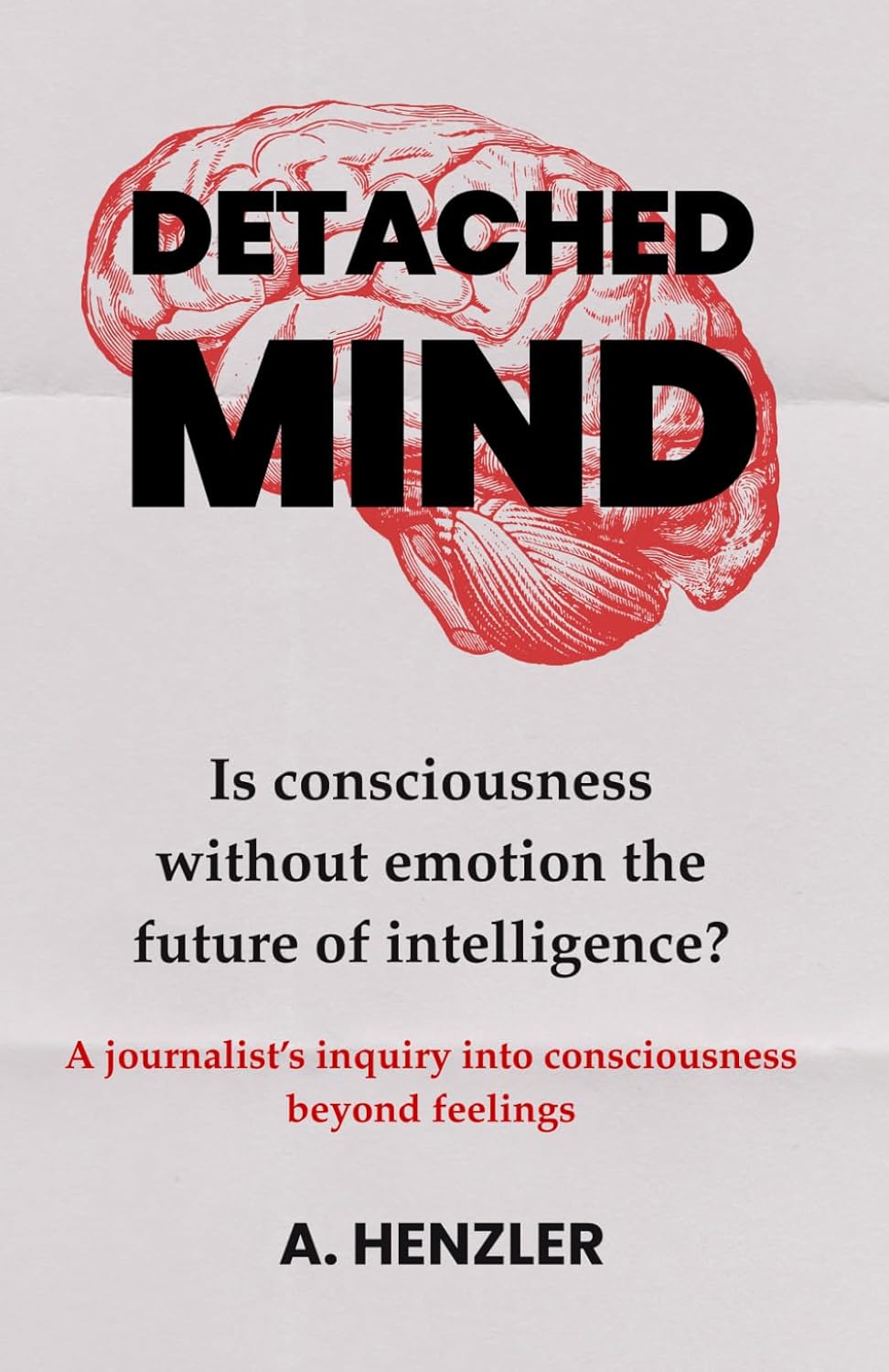
Detached Mind
Is consciousness without emotion the future of intelligence?
Detached Mind is a psychological-philosophical novel that blends neuroscience, Buddhist thought, and investigative journalism into a single, unsettling narrative.


Leave a comment