
Detached Mind, Chapter One: Emotional Detachment
The second Tuesday arrives with rain – the persistent, grey kind that makes everything feel slightly heavier than it needs to. Reily has spent the week since the first meeting turning it over, still not sure whether what happened in that house was an interview or something closer to being studied. Morgan opens the door before Reily even reaches it. “You’re exactly on time,” Morgan says. “Learning.”
Reily comes prepared this time – notebook, a short list of clinical terms pulled from the standard literature on psychopathy, the kind of language that usually settles a conversation before it starts. Emotional detachment. A deficit. An inability to bond. The diagnostic language treats it as something missing.
Morgan doesn’t let the framing stand for more than a sentence.
What follows is the real spine of the chapter: not a debate exactly, more a slow dismantling. Morgan takes the vocabulary Reily arrived with – deficit, inability, lack – and turns each word over like it’s evidence of something else entirely. Within a few minutes, the conversation has moved somewhere Reily didn’t plan for, built around a single scenario involving a child and a busy road that Morgan uses to ask a question most people spend their whole lives not asking. It’s simple on the surface. It is not simple to answer.
There’s a second story a little further in, something Morgan describes doing in public, calmly, that most people would call a decent thing to do. Reily assumes it will land as a point in Morgan’s favour. It doesn’t land the way anyone expects, least of all Reily, because the story isn’t really about what Morgan did. It’s about why, and the “why” is where the chapter gets uncomfortable.
Underneath all of it, the chapter is doing something more serious than provocation for its own sake. It pulls in real, published research – genuine neuroscience and psychology, not invented to fit the plot – to back an argument that most readers will find harder to dismiss than they’d like. There’s a moment, too, where Morgan reaches for something entirely unexpected: a centuries-old philosophical tradition, cited from memory, used to reframe the entire question of what emotion is actually for. It’s one of the more surprising turns in the book, and not one you’d predict from the chapter’s opening page.
Reily pushes back throughout – the instinctive objections, the ones most readers will be making in their own heads at the same time. Morgan has an answer ready for nearly all of them, which is its own kind of unsettling.
Then, near the end of the session, almost offhand, Morgan mentions something from childhood. A small detail. The kind of thing you’d expect to be reassured by and aren’t. Reily doesn’t press it in the moment, there isn’t time, and the shift in Morgan’s tone makes it clear the door has already closed again. But it’s the kind of detail that’s easy to forget you noticed, right up until several chapters later, when it resurfaces and the whole first conversation reads differently in hindsight.
Reily leaves that session with rain still coming down and a question that doesn’t get resolved for a long time: is what looks like an absence of feeling actually a kind of clarity most people never get access to, because they can’t stop feeling long enough to see it?
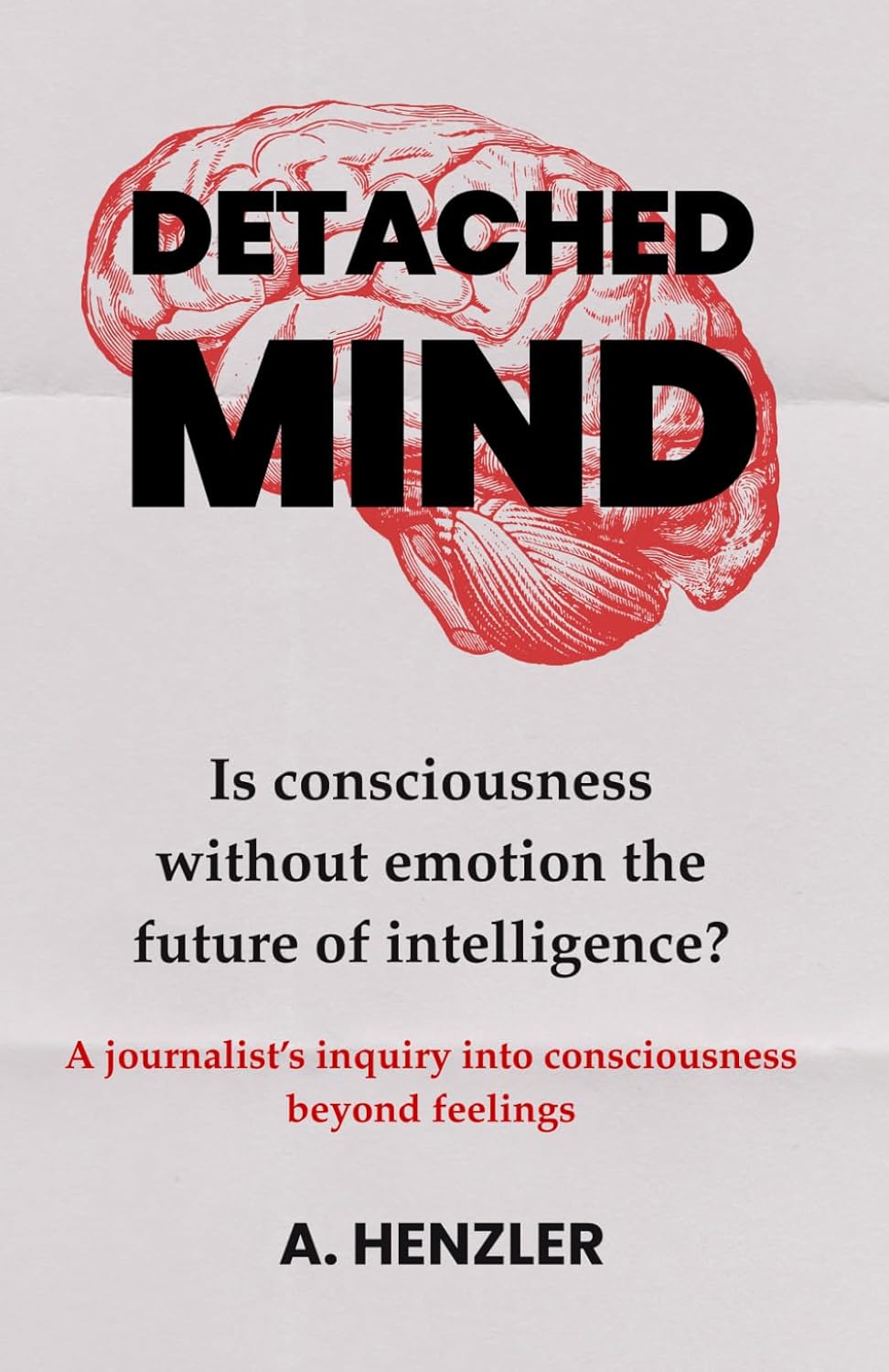
Detached Mind
Is consciousness without emotion the future of intelligence?
Detached Mind is a psychological-philosophical novel that blends neuroscience, Buddhist thought, and investigative journalism into a single, unsettling narrative.


Leave a comment